
Published 23-11-2025
Copyright (c) 2025 Stephanie Black, Luise Vormittag

This work is licensed under a Creative Commons Attribution 4.0 International License.
Abstract
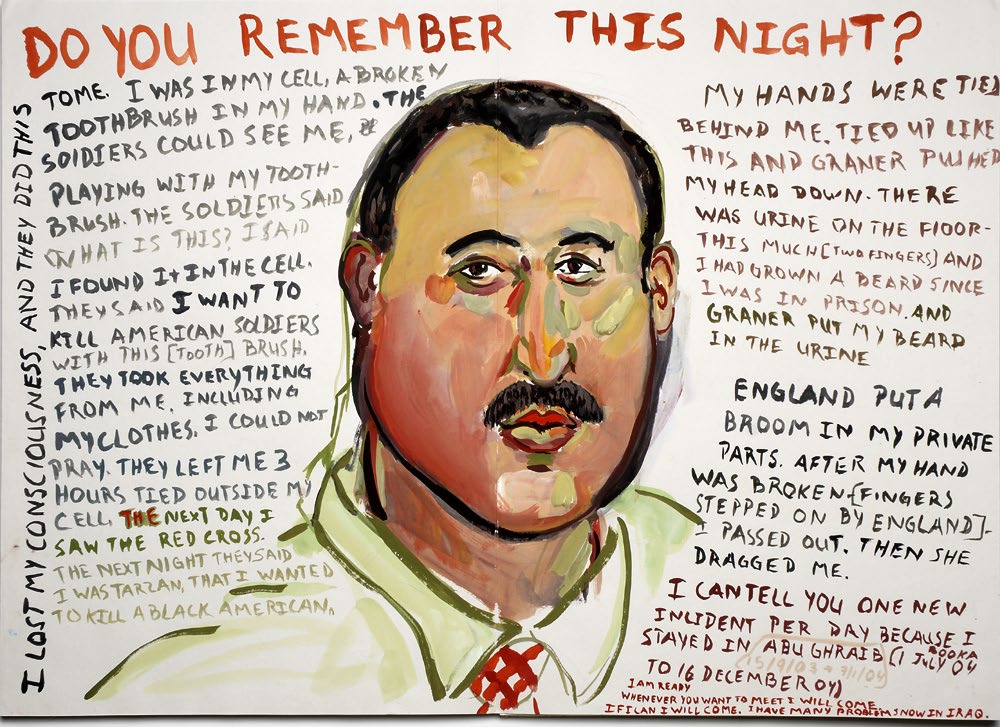
Powerful images depicting the horror and devastation of geopolitical events and heinous abuses of power have an indisputable role to play in our society. This article however challenges the role of the eye witness as the sole conduit to valuable insights within news and media discourse. The authors propose that image-making practices (such as illustration) that operate at a distance from events allow for equally valid insights. Using three case studies of imagery produced at a remove from the news events it thematises, they argue that it is precisely the distance from the news event that enables the work to draw out aspects that are usually outside the frame of visibility. An analysis of Daniel Heyman’s portraits of Abu Ghraib detainees, Tings Chak’s schematic representations of migrant detention centres, and Catherine Anyango Grunewald’s animated film concerning the death of black teenager Michael Brown demonstrates that working at a remove can enable illustrators, artists and activists to reveal overlooked systems of power and control, restore dignity to dehumanised subjects, and reveal the limits of visual evidence. The article concludes with a reflection on the possibilities and limitations of the visual as a form of evidence.