
Chryptochrome: how can the materiality of mobile LiDAR technology be used as a metaphor for eco-conscious storytelling
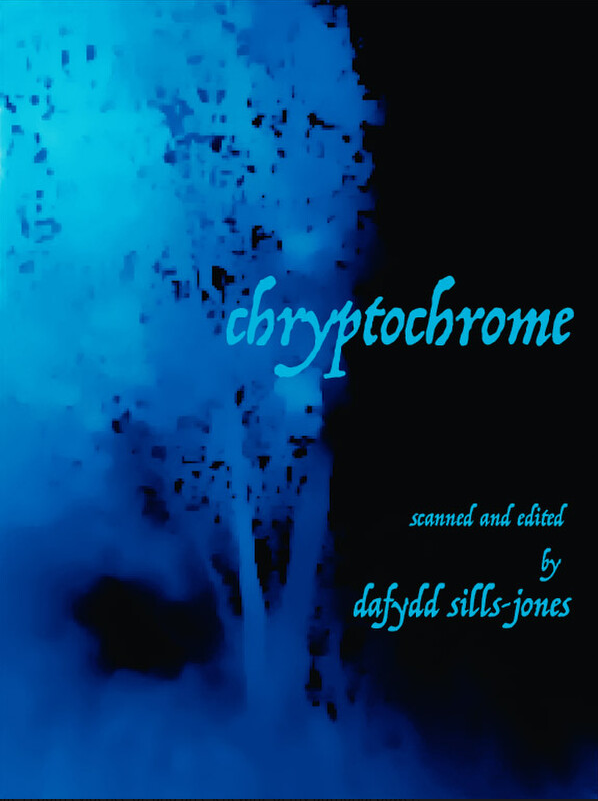
Published 13-03-2026
Keywords
- eco-crticism,
- lidar,
- documentary,
- mobile filmmaking
Copyright (c) 2026 Dafydd Sills-Jones

This work is licensed under a Creative Commons Attribution 4.0 International License.
Abstract
In recent years, LiDAR has become a foundational tool in virtual production (VP), extended reality, and real-time environment pipelines, enabling rapid translation between physical spaces and computational worlds (Jones et al., 2022; Graham and Cook, 2023). This practice-as-research project investigates how mobile LiDAR scanning can also operate as a creative and conceptual tool in on-location ecological filmmaking. Produced in 2024 using a smartphone LiDAR sensor and generative sound tools, the short film Chryptochrome explores how computational sensing technologies reconfigure relationships between human authorship, machinic perception, and vegetal presence. Rather than treating LiDAR as an instrument for spatial accuracy or digital replication, the project foregrounds its material qualities, such as pulsed light, trace-based reconstruction, and algorithmic uncertainty, as aesthetic resources. Situated within mobile filmmaking, eco-media theory, and debates around human-machine interaction in art, the film positions LiDAR as a speculative interface through which physical environments are translated into ephemeral virtual forms.
Link to video: Chryptochrome